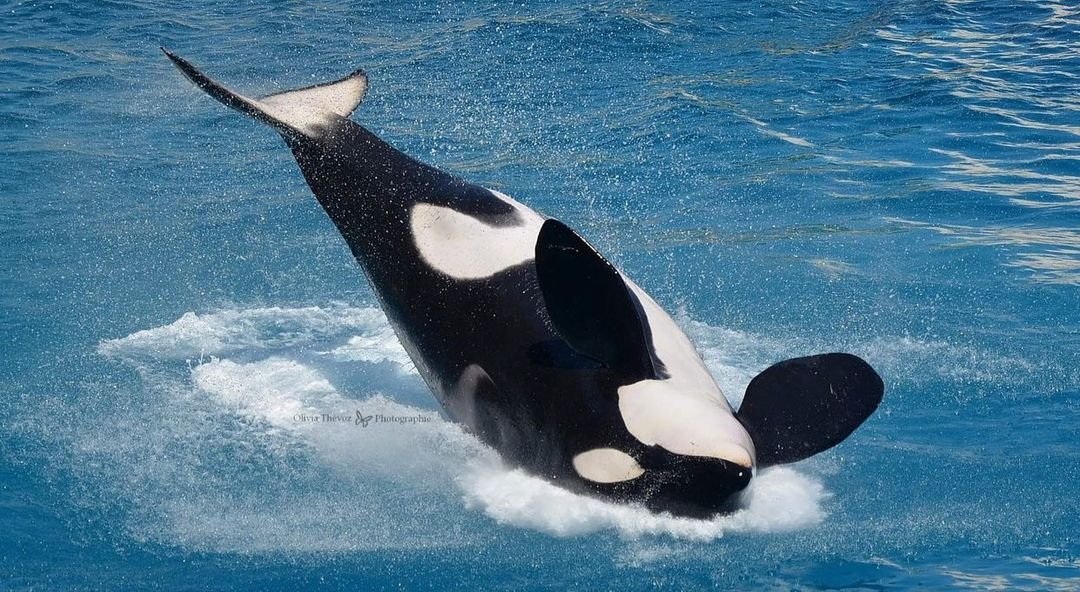
Global Orca ID: GOID-C1A
Name: Inouk
Sex: Male
Status: Deceased
Classification: Icelandic ancestry
Species: Orcinus orca (Orca / Killer Whale)
Date of birth: 23 February 1999
Date of death: 28 March 2024
Age at death: 25 years, 1 month, 5 days
Birthplace: Marineland Antibes, France
Last known location: Marineland Antibes, France
1. Overview
Inouk was a male killer whale (Orcinus orca) born on 23 February 1999 at Marineland Antibes, located in Antibes, southern France. He was the offspring of Sharkane and Kim II, two wild-caught orcas originating from Icelandic waters who were subsequently held at Marineland.
Inouk was captive-born and spent his entire documented life at Marineland Antibes. He was the younger brother of Shouka and the older brother of Wikie. Through Wikie, he was the maternal uncle of Moana and Keijo.
Inouk’s life is particularly significant in the historical documentation of captive orcas because of the extensive veterinary and photographic records available concerning his physical condition.
In March 2019, an expert report prepared by marine biologist Ingrid N. Visser, Dr John Jett and Dr Jeff Ventre documented extensive dental deterioration, including teeth worn down to the gums, fractured teeth and previously drilled teeth.
A subsequent August 2020 report by Ingrid Visser documented further concerns, including regurgitation and extensive subdermal tissue damage around the chin and throat.
Inouk’s final years were also documented through veterinary records examined by court-appointed veterinary experts in France. These records revealed recurring dental problems, repeated veterinary treatment, suspected oral infection, periods of reduced appetite and other health concerns.
Inouk died on 28 March 2024 at Marineland Antibes, aged 25.
Initial autopsy findings released by Marineland on 5 April 2024 attributed his death to accidental ingestion of a metallic foreign object weighing less than two grams.
A subsequent final veterinary expert report dated 7 April 2025 confirmed that a metallic foreign object in the intestine had caused focal enteritis and extensive peritonitis.
His death left his younger sister Wikie and nephew Keijo as the remaining members of their immediate family group at Marineland.
Inouk’s individual history provides an important record of captive orca health, dental pathology, family lineage and veterinary documentation.
Primary sources: Visser et al. (2019); Visser (2020); Dhote and Hugnet (2025); Marineland (2024).
2. Identification
| Field | Information |
|---|---|
| Global Orca ID | GOID-C1A |
| Name | Inouk |
| Alternative spelling | Inouk |
| Sex | Male |
| Species | Orcinus orca |
| Population/ancestry | Icelandic ancestry |
| Pod/social group | Marineland Antibes captive group |
| Ecotype | Not established |
| Wild / Captive | Captive-born |
| Date of birth | 23 February 1999 |
| Date of death | 28 March 2024 |
| Age at death | 25 years |
| Birth facility | Marineland Antibes |
| Last facility | Marineland Antibes |
| Identification confidence | High |
Identification Notes
Dorsal fin
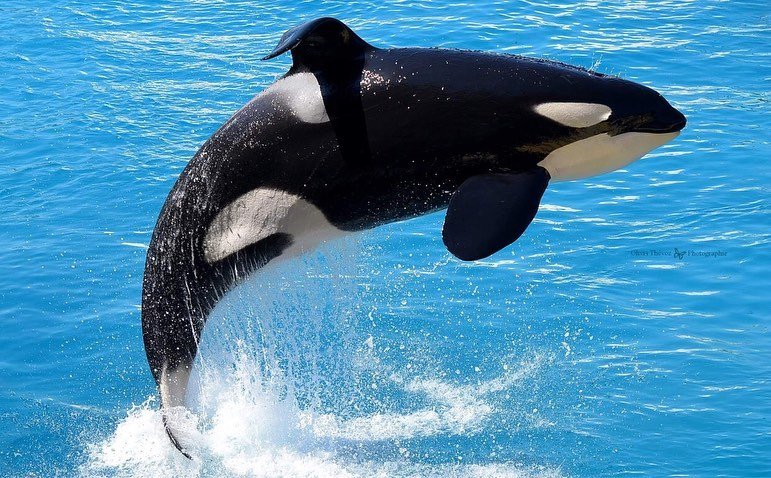
Inouk was identifiable by his fully collapsed dorsal fin, which leaned towards his right side.
A 2018 image reproduced in the March 2019 expert report showed the collapsed fin and an open wound along its trailing edge. Other notches along the trailing edge were also identified as evidence of earlier wounds.
Dental identification
Inouk had extensive and distinctive dental deterioration. Photographs taken in 2011 showed teeth worn down to the gums, drilled teeth and fractured teeth.
By June 2020, photographs documented the advanced condition of his remaining teeth.
Body and physical identification
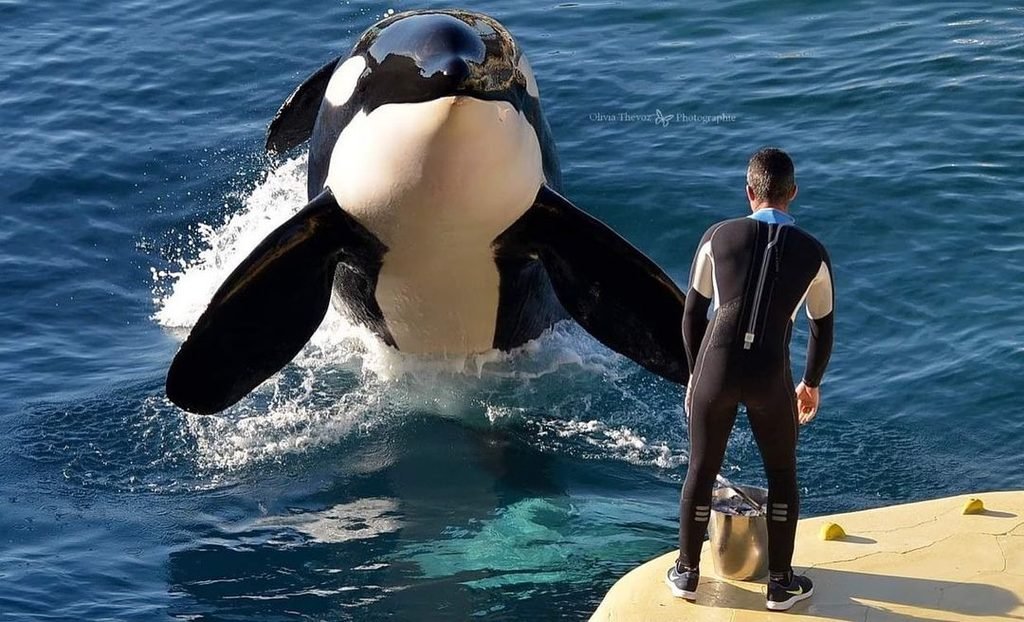
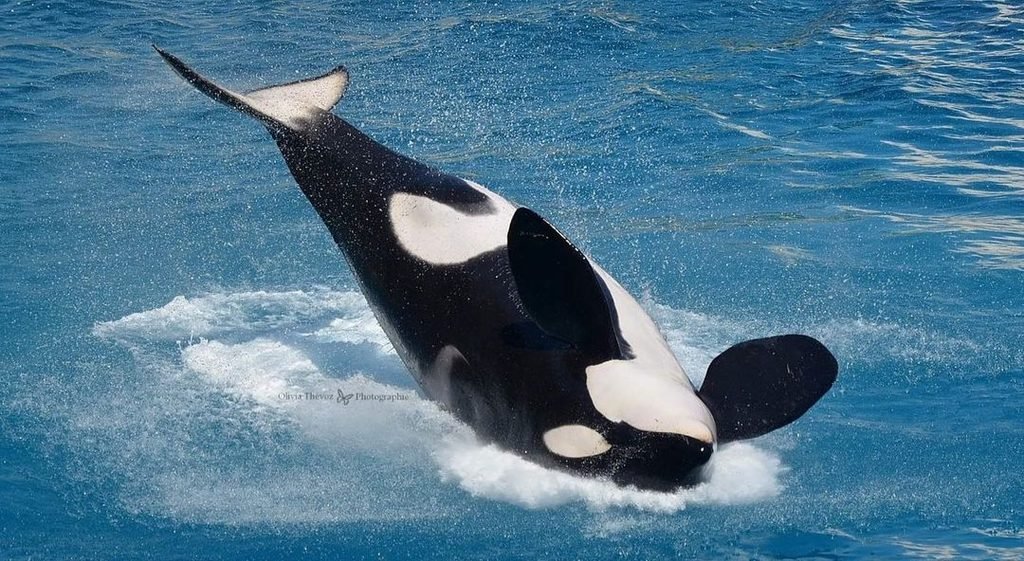
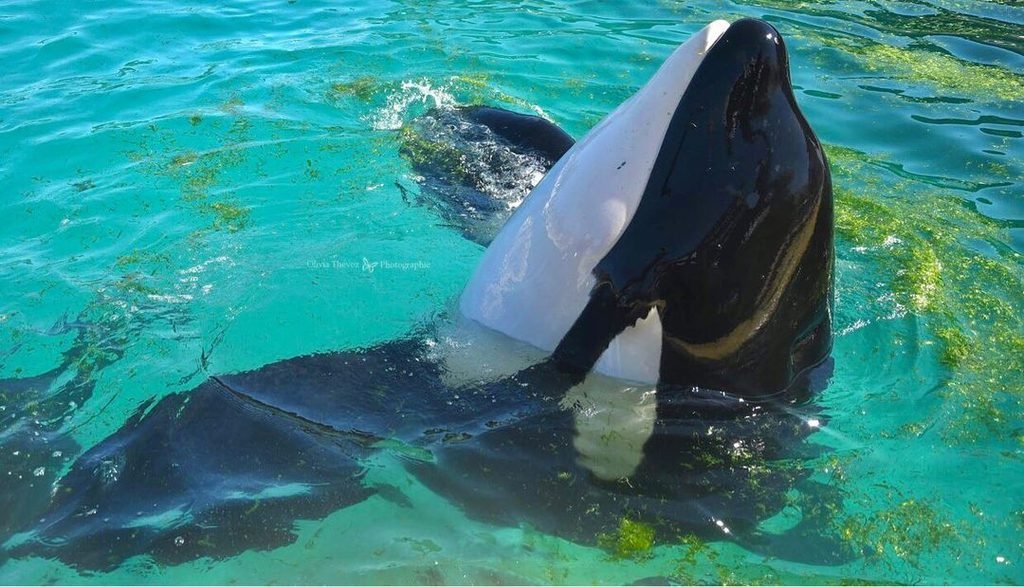
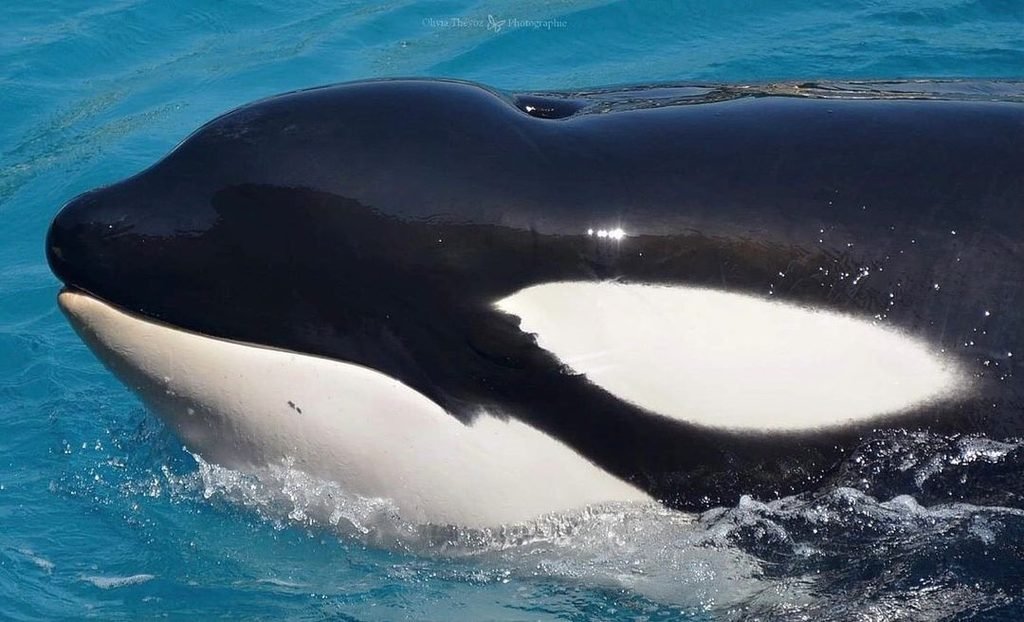
Photographic documentation includes his body profile, dorsal fin, head, mouth and dental condition. These images provide a useful historical identification archive.
His collapsed dorsal fin and extensive dental condition are particularly useful distinguishing observations.
Sources: Visser et al. (2019), Figure 18; Visser (2020); Whale Sanctuary Project (2024).


3. Early Life
Birth
Confirmed birth date: 23 February 1999.
Birth location: Marineland Antibes, Antibes, France.
Birth type: Captive-born.
Mother: Sharkane.
Father: Kim II.
Inouk was born at Marineland Antibes into a family whose history was already shaped by captivity.
His mother, Sharkane, had been captured in Icelandic waters in October 1989 and transferred to Marineland Antibes in January 1990.
His father, Kim II, was captured in Icelandic waters in October 1982 and transferred to Marineland Antibes in March 1983.
Both parents originated from the North Atlantic Icelandic population.
Inouk was raised at Marineland alongside his older sister Shouka, born in February 1993, and his younger sister Wikie, born in June 2001.
His older sister Shouka was transferred from Marineland in May 2002, when Inouk was approximately three years old.
His father Kim II died in November 2005, when Inouk was six years old. His mother Sharkane died in January 2009, when he was nine.
Inouk subsequently remained at Marineland with his younger sister Wikie and other orcas within the facility.
Family background
Inouk’s family history connects several generations of captive-born orcas at Marineland Antibes.
His younger sister Wikie later became the mother of Moana and Keijo.
This made Inouk the maternal uncle of both calves.
Sources: Ceta-Base Marineland Antibes Census; Whale Sanctuary Project (2024).
4. Capture / Acquisition
Wild capture: Not applicable.
Inouk was born in captivity at Marineland Antibes and was never documented as having been captured from the wild.
His parents were both wild-caught in Icelandic waters.
Parental capture history
Mother – Sharkane
- Origin: Iceland.
- Capture date: October 1989 (exact day not established).
- Arrival at Marineland Antibes: 12 January 1990.
Father – Kim II
- Origin: Iceland.
- Capture date: October 1982 (exact day not established).
- Arrival at Marineland Antibes: 6 March 1983.
Age at capture: Not applicable to Inouk.
Other orcas involved: His parents, Sharkane and Kim II, are documented as the breeding pair.
Sources: Ceta-Base historical orca census; Whale Sanctuary Project.
5. Life History Timeline
| Date | Location | Event | Source |
|---|---|---|---|
| October 1982 | Iceland | Father Kim II captured from the wild | Ceta-Base |
| October 1989 | Iceland | Mother Sharkane captured from the wild | Ceta-Base |
| 12 January 1990 | Marineland Antibes | Sharkane arrives at the facility | Ceta-Base |
| 6 March 1993 | Marineland Antibes | Older sister Shouka born | Ceta-Base |
| 23 February 1999 | Marineland Antibes | Inouk born to Sharkane and Kim II | Ceta-Base |
| 20 May 2002 | France | Sister Shouka transferred to Six Flags Worlds of Adventure | Ceta-Base |
| 24 November 2005 | Marineland Antibes | Father Kim II dies | Ceta-Base |
| 3 January 2009 | Marineland Antibes | Mother Sharkane dies | Ceta-Base |
| 2010 | Marineland Antibes | Veterinary records later referenced by Visser document ongoing regurgitation behaviour | Visser et al. (2019) |
| 2011 | Marineland Antibes | Photographs document extensive dental deterioration | Visser et al. (2019) |
| 2018 | Marineland Antibes | Photographic/video evidence documents collapsed dorsal fin and an open wound | Visser et al. (2019) |
| March 2019 | France | Expert report documents severe dental pathology | Visser et al. (2019) |
| 27 June 2020 | Marineland Antibes | Photographs document regurgitation and subdermal chin/throat damage | Visser (2020) |
| 2011 | Marineland Antibes | Nephew Moana born to Wikie | Ceta-Base |
| 20 November 2013 | Marineland Antibes | Nephew Keijo born to Wikie | Ceta-Base |
| 21 September 2023 | France | Court of Appeal orders veterinary expert assessment of Inouk and Moana | Dhote and Hugnet (2025) |
| 28 November 2023 | Marineland Antibes | Government veterinary inspections of the orcas | Dhote and Hugnet (2025) |
| 2023–2024 | Marineland Antibes | Veterinary records document recurring dental treatment and other health concerns | Dhote and Hugnet (2025) |
| 28 March 2024 | Marineland Antibes | Inouk dies aged 25 | Marineland / Ceta-Base |
| 29 March 2024 | Vendée, France | Necropsy conducted | Dhote and Hugnet (2025) |
| 5 April 2024 | France | Initial autopsy findings publicly released | Marineland |
| 7 April 2025 | France | Final court-appointed veterinary expert report completed | Dhote and Hugnet |
6. Locations & Facilities
Location 1
Facility: Marineland Antibes
Country: France
Dates: 23 February 1999 – 28 March 2024
Location: Antibes, Alpes-Maritimes, French Riviera.
Inouk was born at Marineland Antibes and spent his entire documented life at this facility.
The facility contained a complex of five connected orca pools, including a main pool used for public performances.
The 2019 expert report included aerial imagery and a schematic of the pool complex.
The orcas were moved between pools according to the facility’s operational schedule.
Inouk never experienced a documented transfer to another facility.
Sources: Visser et al. (2019); Dhote and Hugnet (2025); Ceta-Base.
7. Family & Social Relationships
Known relatives
Mother: Sharkane (also recorded as Sharkan).
Father: Kim II.
Full siblings:
- Shouka – born 25 February 1993.
- Wikie – born 1 June 2001.
Maternal nephews:
- Moana – born 16 March 2011.
- Keijo – born 20 November 2013.
Extended family
Inouk was born from the pairing of Sharkane and Kim II, both originally captured in Iceland.
His sister Shouka was transferred to the United States in 2002.
His younger sister Wikie remained at Marineland and subsequently gave birth to two calves.
Inouk was therefore the maternal uncle of Moana and Keijo.
His nephew Moana died on 18 October 2023, approximately five months before Inouk’s own death.
His nephew Keijo remained at Marineland alongside Wikie.
Social relationships
Inouk spent his life within the Marineland captive social group.
The 2019 expert report discussed historical facility records describing Inouk as being dominated by other orcas and experiencing social difficulties.
The report also discussed concerns about aggression and the potential relationship between his social circumstances, regurgitation and health.
These observations are attributed to the facility records and the independent researchers. Detailed daily social-interaction records have not been made publicly available.
Sources: Ceta-Base; Visser et al. (2019); Whale Sanctuary Project (2024).
8. Offspring
Known offspring: None documented in the sources reviewed.
Inouk was male.
No confirmed offspring have been identified in the Ceta-Base records or other reviewed family-history sources.
Reproductive status: No documented offspring.
9. Transfers & Movements
Inouk was born at Marineland Antibes and remained at the facility throughout his life.
There are no documented transfers to other marine parks, aquariums or facilities.
| Date | From | To | Reason |
|---|---|---|---|
| 23 February 1999 | N/A | Marineland Antibes | Captive birth |
| 28 March 2024 | Marineland Antibes | N/A | Death |
Total documented facility transfers: Zero.
Sources: Ceta-Base; Whale Sanctuary Project.
10. Health & Physical History
Inouk has one of the more extensively documented individual dental histories among captive orcas.
His medical history includes photographic documentation, independent expert observations and veterinary records examined during the French court-appointed expert process.
2011 – Early documented dental deterioration
Photographs reproduced in the March 2019 expert report showed extensive damage to Inouk’s lower teeth.
Observed conditions included:
- Teeth worn down to the gum line.
- Broken teeth.
- Previously drilled teeth.
- Significant dental deterioration.
These photographs demonstrated that substantial dental damage was already present when Inouk was approximately 12 years old.
2019 – Extensive dental pathology
In March 2019, Ingrid N. Visser, John Jett and Jeff Ventre prepared an expert report for One Voice.
The report described severe dental damage affecting multiple teeth.
The authors documented:
- Extensive tooth wear.
- Fractured teeth.
- Teeth worn to or below gum level.
- Exposed dental pulp in some affected teeth.
- Missing teeth and remaining damaged tooth structures.
The report discussed the possible consequences of chronic dental disease, including infection and pain.
It also examined oral stereotypic behaviours and the possible relationship between repetitive biting, hard surfaces and dental deterioration.
Physical measurements recorded in 2019 report
| Measurement | Recorded information |
|---|---|
| Sex | Male |
| Length | Approximately 4.9 metres |
| Weight | Approximately 1,900 kg |
Source: Visser et al. (2019).
2018 – Dorsal fin injury
The 2019 report reproduced an image from video recorded in 2018.
The image showed:
- A fully collapsed dorsal fin.
- The fin leaning towards the right side.
- An open wound along the trailing edge.
- Additional notches consistent with previous injuries.
June 2020 – Further physical concerns
Ingrid Visser published an update in August 2020 based on photographs taken on 27 June 2020.
The report documented:
Regurgitation
Photographs showed at least two instances of regurgitation.
The report discussed the possible relationship between regurgitation, stress, social aggression and gastrointestinal health.
Subdermal chin and throat damage
Photographs documented extensive subdermal tissue damage around the chin and throat.
The affected region appeared raised and marbled.
Visser suggested that pressure against the concrete show platform during feeding-related behaviour could potentially contribute to the damage.
This was a proposed explanation, not a confirmed diagnosis.
2023–2024 – Veterinary records
The court-appointed veterinary expert report published on 7 April 2025 provides additional details from Inouk’s medical records.
The report documented:
- Recurrent and serious dental problems.
- Episodes suggesting dental pain.
- Local dental treatment using lidocaine.
- Prescriptions including tramadol, clindamycin and betamethasone.
- A multi-stage extraction of a tooth designated RL7 in the veterinary records.
- Repeated veterinary treatment, sometimes daily or several times per week.
- Multiple courses of antibiotics, with several antibiotics used over a period exceeding two months.
- Suspected oral candidiasis, for which voriconazole was introduced.
- Periods of apathy and reduced appetite.
- A temporary episode of loss of balance, potentially associated with metronidazole treatment.
The experts also described blood results indicating an inflammatory process and subsequent concern about possible multi-organ dysfunction.
The records documented a deterioration in biological and immune parameters on 27 March 2024, one day before his death.
Important: The final veterinary report did not establish that Inouk’s dental condition directly caused his death.
Sources: Visser et al. (2019); Visser (2020); Dhote and Hugnet (2025).
11. Behaviour & Social History
Regurgitation
The March 2019 report discussed historical Marineland veterinary records indicating that Inouk had experienced regurgitation behaviour since approximately 2010.
The researchers examined the possible relationship between regurgitation, stress, illness, social instability and gastrointestinal problems.
The August 2020 update documented further instances of regurgitation in photographs taken on 27 June 2020.
Repetitive behaviours
The 2019 report discussed biting concrete walls and other repetitive oral behaviours documented in facility records.
The researchers considered these behaviours relevant to his dental deterioration.
Social difficulties
The March 2019 report quoted facility records describing Inouk as being dominated by other orcas.
The report also discussed concerns about his position within the social group and the potential effects of aggression from other animals.
These are historical observations reported by the researchers and should not be interpreted as a complete record of every social interaction.
Feeding behaviour
The 2019 report examined facility records describing difficulties maintaining Inouk’s food intake.
The records included comments about difficulty keeping his food intake high and references to illness and dental problems.
The 2020 update documented photographs of Inouk pressing his chin and throat against the concrete edge of the show platform while seeking food.
Training and performances
Inouk participated in structured training and public performances at Marineland Antibes.
The August 2020 report discussed his continued participation in shows and recommended that these activities cease because of the health concerns identified by the researcher.
There is insufficient publicly available evidence to establish his individual emotional response to performances.
Sources: Visser et al. (2019); Visser (2020).
12. Reproductive History
Sex: Male.
Known offspring: None documented.
Known successful births: None documented.
Known pregnancies: Not applicable.
Known reproductive partners: None confirmed in the sources reviewed.
No confirmed reproductive history or offspring have been identified for Inouk.
13. Photographic Identification
Key identification photographs
The following photographic material should be included in Inouk’s identification archive:
1. Dental photographs – 2011
The 2019 expert report includes photographs of Inouk’s lower teeth, showing extensive dental deterioration.
2. Dorsal fin – 2018
The 2019 report includes a video still showing the fully collapsed dorsal fin, its rightward lean and an open wound along the trailing edge.
3. Dental photographs – 2019
The expert report contains multiple photographs documenting the condition of his teeth and gums.
4. Chin and throat – 27 June 2020
The August 2020 update includes photographs showing subdermal tissue damage.
5. Feeding-platform behaviour – June 2020
Photographic documentation shows Inouk pressing against the concrete platform while seeking food.
Notable identification features
- Fully collapsed dorsal fin.
- Dorsal fin leaning to the right.
- Notches along the trailing edge.
- Historically documented open wound on the dorsal fin.
- Extensive dental deterioration.
- Distinctive physical changes documented across photographs from 2011–2020.
Photographic archive references:
- Visser et al. (2019), Figures 18 and related dental photographs.
- Visser (2020), Figures 2–8.
Note: Photographs should be credited to their original photographers and permission obtained before reproducing copyrighted material on Global Orca ID.
14. Documented Sightings
As a captive-born orca, Inouk does not have a wild sighting history.
His documented appearances are associated with Marineland Antibes.
Documented photographic and observational records
| Date | Location | Record |
|---|---|---|
| 2011 | Marineland Antibes | Photographic documentation of dental condition |
| 2016 | Marineland Antibes | Historical photographic records of Inouk |
| 2018 | Marineland Antibes | Video documentation of collapsed dorsal fin |
| March 2019 | Marineland Antibes | Expert photographic assessment |
| 27 June 2020 | Marineland Antibes | Public photographs supplied to Ingrid Visser |
| 2023 | Marineland Antibes | Veterinary and inspection records |
| March 2024 | Marineland Antibes | Final documented period before death |
These are historical documentation records rather than independent wild sightings.
15. Final Years
Inouk spent his final years at Marineland Antibes alongside his younger sister Wikie and nephew Keijo.
His nephew Moana had died in October 2023.
During the final years of his life, Inouk continued to experience documented dental problems.
The veterinary records examined by court-appointed experts in France provide an important account of his medical condition during 2023 and early 2024.
The records describe recurring dental pain and infection, repeated treatment, extraction procedures and several different medications.
Treatment became particularly frequent during the final months of his life.
The court-appointed experts documented:
- Repeated dental procedures.
- A prolonged course of antibiotic treatment.
- Suspected oral fungal infection.
- Episodes of reduced appetite.
- Periods of apathy.
- Blood results indicating inflammation.
- Deterioration in biological parameters shortly before death.
On 27 March 2024, the veterinary records documented a significant deterioration in his biological and immune parameters.
Inouk was found dead the following day, 28 March 2024.
The final veterinary expert report subsequently examined his medical history alongside the post-mortem findings.
The experts distinguished his pre-existing dental problems from the intestinal condition identified as the direct cause of death.
Sources: Dhote and Hugnet (2025); Visser et al. (2019); Visser (2020).
16. Death
Date of death: 28 March 2024
Location: Marineland Antibes, France
Age: 25 years
Status: Deceased.
Circumstances
Inouk died at Marineland Antibes on 28 March 2024.
His death was announced publicly by Marineland.
Initial autopsy findings – 5 April 2024
Marineland published the initial autopsy findings on 5 April 2024.
The announcement stated that Inouk had accidentally ingested a metallic foreign object weighing less than two grams.
The object caused local inflammation and affected his digestive system.
The initial findings identified:
- Subacute fibrinous enteritis.
- Subacute fibrinous peritonitis.
- Inflammation associated with ingestion of the metallic object.
At the time of the announcement, additional tissue and fluid analyses were still being undertaken.
Marineland stated that the origin of the foreign object was unknown.
Final veterinary expert findings – 7 April 2025
The subsequent court-appointed veterinary expert report provided further detail regarding Inouk’s death.
The final pathology findings confirmed:
- Focal, extensive fibrinosuppurative enteritis.
- A metallic foreign object within the intestine.
- Diffuse fibrinosuppurative peritonitis.
- Significant inflammatory material within the abdominal cavity.
- Evidence suggesting at least partial intestinal perforation on microscopic examination.
The experts explained that inflammation associated with the metallic object resulted in bacterial translocation, inflammation of the peritoneum and subsequent widespread peritonitis.
The foreign object was described in the report as having pointed ends.
Its origin was not identified.
Relationship to previous dental problems
An important conclusion in the final veterinary expert report was that no direct causal relationship was established between Inouk’s dental problems and his death from ingestion of the metallic object.
The report did, however, discuss the possibility that oral pain and associated behavioural changes could potentially encourage ingestion of non-food substances.
This possibility was not established as the cause of the ingestion event.
Necropsy
The necropsy was conducted on 29 March 2024 in Vendée, France.
Veterinarians involved included independent veterinary professionals and Marineland’s veterinarian.
The final pathology findings were subsequently reviewed as part of the court-appointed expert process.
Primary sources:
- Marineland, 5 April 2024.
- Dhote and Hugnet, 7 April 2025, final expert report.
17. Legacy & Historical Significance
Inouk holds an important place in the historical documentation of captive orcas in Europe.
His individual record is particularly significant because of the extensive photographic, veterinary and expert documentation available throughout his life.
1. Extensive dental documentation
Inouk became the subject of two substantial expert reports examining dental deterioration in captive orcas.
The 2019 report prepared by Ingrid Visser, John Jett and Jeff Ventre provided detailed photographic documentation and analysis of his dental condition.
The 2020 update added further observations of his health and physical condition.
These reports form part of the wider scientific discussion surrounding dental pathology in captive cetaceans.
2. Veterinary documentation
The 2025 court-appointed veterinary expert report provides an unusually detailed retrospective record of Inouk’s medical treatment.
It includes information from veterinary records, laboratory results, medication histories, imaging and post-mortem examinations.
This provides valuable historical documentation for researchers studying the health of captive orcas.
3. Family lineage
Inouk was a member of the Sharkane and Kim II family line.
His relationship with Wikie, Moana and Keijo connects multiple generations of the Marineland Antibes orca population.
His record is particularly important for preserving the maternal family relationships within this captive lineage.
4. Historical record of Marineland Antibes
Inouk was one of the last surviving orcas from the family group at Marineland.
His death in March 2024 followed the death of his nephew Moana in October 2023.
His passing left Wikie and Keijo as the two remaining members of their immediate family group at the facility.
5. Importance to Global Orca ID
Inouk’s record provides an opportunity to preserve:
- Individual identification photographs.
- Family lineage.
- Captive breeding history.
- Physical and dental development.
- Veterinary history.
- Historical facility information.
- Final pathology and cause-of-death documentation.
His history demonstrates the importance of maintaining individual orca records that bring together information from different research, veterinary and historical sources.
18. Controversies / Conflicting Information
Several details concerning Inouk require careful source attribution.
Name spelling
His mother’s name appears as both Sharkane and Sharkan.
Ceta-Base uses Sharkan, while other sources use Sharkane.
Global Orca ID should retain both spellings in the record, using Sharkane as the preferred display name if consistent with the existing family profiles.
Dental damage and its causes
The 2019 and 2020 reports by Ingrid Visser and colleagues discuss possible causes of Inouk’s dental deterioration, including repetitive biting, contact with hard surfaces and other oral behaviours.
These reports provide expert interpretations, but individual mechanisms should not be presented as conclusively established for every damaged tooth.
Cause of death
The initial Marineland announcement on 5 April 2024 described the ingestion of a metallic foreign object and associated inflammation.
The final veterinary expert report published on 7 April 2025 provided more detailed pathological findings and confirmed the intestinal foreign body and resulting peritonitis.
The final report also clarified that no direct causal relationship was established between his dental problems and his death.
Relationship between dental pain and foreign-object ingestion
The final report discussed the possibility that oral pain and behavioural changes might contribute to pica, or the ingestion of non-food substances.
This was a possible explanation discussed by the experts, not a proven explanation for how Inouk ingested the object.
Identification and population classification
Inouk’s identity, sex, birth date and parentage are strongly documented.
His Icelandic ancestry is supported by the known origins of his parents. However, an exact wild population or ecological type should not be assigned without further genetic or scientific evidence.
19. Identification Confidence
Global Orca ID assessment: CONFIRMED
| Identification field | Confidence |
|---|---|
| Individual identity | Confirmed |
| Name | Confirmed |
| Sex | Confirmed |
| Birth date | Confirmed |
| Birth location | Confirmed |
| Mother | Confirmed |
| Father | Confirmed |
| Siblings | Confirmed |
| Death date | Confirmed |
| Death location | Confirmed |
| Dental history | Confirmed through expert and veterinary documentation |
| Dorsal fin identification | Confirmed through photographic documentation |
| Icelandic ancestry | Confirmed through parental origin records |
| Specific wild ecotype | Unverified |
| Offspring | None documented |
Identification assessment
Inouk’s identity is supported by consistent historical facility records, captive cetacean databases, photographic documentation, expert reports and veterinary records.
His birth, parentage and death are independently documented.
His physical identification is supported by photographs showing his collapsed dorsal fin and distinctive dental condition.
Overall identification confidence: High / Confirmed.
20. Sources & References
The following references support the information contained in this profile.
Primary expert reports
1. Visser, I.N., Jett, J. & Ventre, J. (2019).
Inouk: Captive 20-year-old male orca, with chronic and extensive tooth damage.
Report prepared for One Voice, March 2019. 28 pages.
https://2025.orcaresearch.org/wp-content/uploads/2025/01/Visser-2019-Inouk-One-Voice.pdf
Relevant sections:
- Dental damage.
- Physical condition.
- Dorsal fin.
- Historical veterinary observations.
- Behaviour and health concerns.
2. Visser, I.N. (2020).
Inouk: Captive 20-year-old male orca, with chronic and extensive tooth damage – August 2020 Update.
Report prepared for One Voice. 15 pages.
https://www.orcaresearch.org/wp-content/uploads/2025/01/Visser-2020-Inouk-One-Voice.pdf
Relevant sections:
- Regurgitation.
- Subdermal chin and throat damage.
- Photographic observations from June 2020.
- Behavioural and health observations.
3. Dhote, F. & Hugnet, C. (2025).
Rapport d’expertise – One Voice / SAS Marineland.
Final court-appointed veterinary expert report, dated 7 April 2025. Court of Appeal of Aix-en-Provence, case RG 22/11225.
Particularly relevant:
- Pages 63–66: Inouk’s veterinary history, dental treatment, final medical condition and pathology findings.
- Veterinary records and post-mortem documentation.
- Assessment of the foreign object and cause of death.
Official facility documentation
4. Marineland Antibes (2024).
First results of the autopsy of Marineland’s orca Inouk.
Press release, 5 April 2024.
Relevant to:
- Official announcement of death.
- Initial autopsy findings.
- Metallic foreign object.
- Initial cause-of-death assessment.
Captive cetacean database
5. Ceta-Base.
Marineland Antibes – Orca Census.
Relevant to:
- Birth and death dates.
- Parentage.
- Family relationships.
- Parental capture history.
- Facility movements.
- Sister Shouka’s transfer history.
Historical and family documentation
6. Whale Sanctuary Project (2024).
The Passing of Inouk.
Relevant to:
- Family history.
- Birth and death.
- Captivity history.
- Family relationships.
7. Whale Sanctuary Project.
A Family in Distress – Wikie and Keijo and Their Family.
Relevant to:
- Inouk’s relationship with Wikie.
- Family lineage.
- Historical circumstances at Marineland.
Scientific literature
8. Jett, J., Visser, I.N., Ventre, J., Waltz, J. & Loch, C. (2017).
Tooth damage in captive orcas (Orcinus orca).
Archives of Oral Biology, 84, 151–160.
DOI: https://doi.org/10.1016/j.archoralbio.2017.09.031
Relevant to:
- Captive orca dental pathology.
- Dental deterioration.
- Scientific background for the 2019 expert report.
Contemporary reporting
9. Fischer, S. (2024).
New orca death in Europe’s biggest marine park raises questions over animal welfare.
Le Monde, 30 March 2024.
Relevant to:
- Contemporary reporting of Inouk’s death.
- Historical context.
- Public reporting on his physical condition.
Last researched: 9 November 2026
Profile research status: Comprehensive draft – further photographic verification recommended.
Researcher: Global Orca ID.
21. Global Orca ID Record
Global Orca ID: GOID-C1A
Profile name: Inouk
Profile created: 9 November 2026
Last updated: 9 November 2026
Record status: Active – Historical Individual
Identification confidence: Confirmed
Sources reviewed: 9 principal references
Images verified: Partially – original photographic archive requires review
Family relationships verified: Yes
Related Global Orca ID Records
Parents:
- Sharkane – GOID-C1
- Kim II – separate paternal record to be assigned
Siblings:
- Shouka – GOID identifier to be assigned
- Wikie – GOID-C1B
Nephews:
- Moana – GOID-C1B-A
- Keijo – GOID-C1B-B
Offspring:
- None documented.
Related population:
- Icelandic ancestry.
Related captive facility:
- Marineland Antibes, France.
Global Orca ID
An international identification and information database for individual orcas.
Identify – Document – Connect


